
Dentures in Northridge
Missing several teeth changes more than your smile, it can make eating and speaking harder, and over time it starts to affect the shape of your face too. Dentures replace those missing teeth with a removable set that’s built to match your mouth, giving you back the ability to chew and talk with confidence.
At our Northridge office, we take the time to figure out which type of denture fits your situation, whether that’s a full set or something partial, and make sure the fit feels right before you walk out the door.
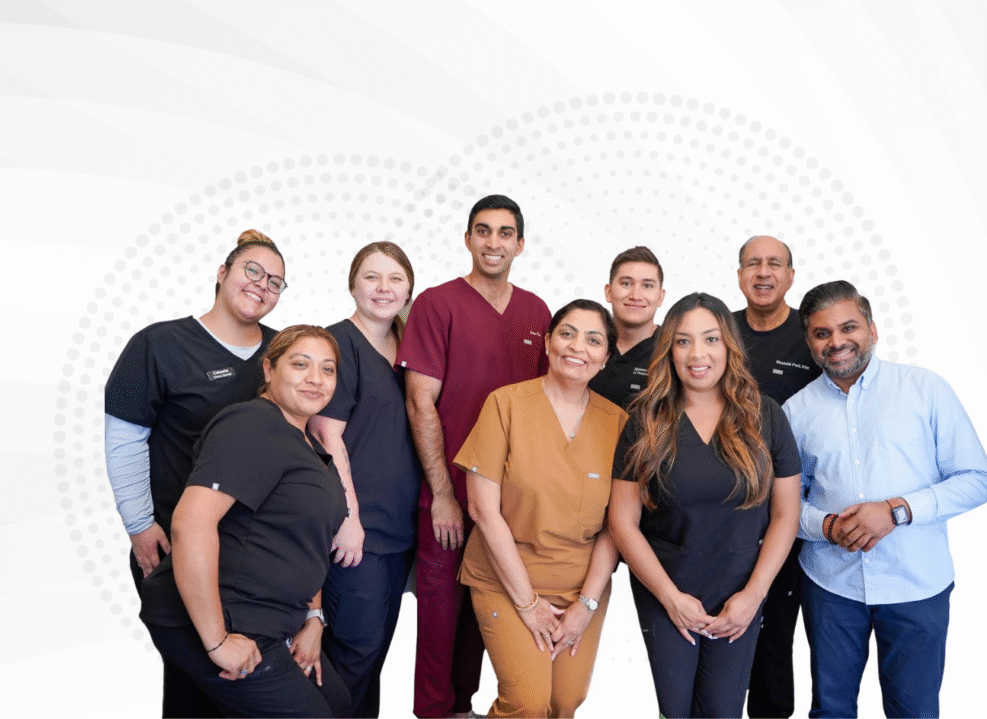
What Are Dentures?
Dentures are a removable dental appliance made to replace some or all of your natural teeth. A full denture is used when all the teeth in an arch are missing, while a partial denture fills in gaps when some natural teeth remain. They’re custom-made from an impression of your mouth, so the base sits comfortably against your gums and the replacement teeth are shaped and shaded to look natural. Most patients who visit Clove Dental Northridge get used to speaking and eating with dentures within a few weeks, and modern materials make them far more comfortable than older versions many people remember.
Benefits of Dentures
Get your bite back
Chewing becomes much easier once there’s something in place of the missing teeth.
Supports your facial structure
Missing teeth can cause the face to look sunken over time, and dentures help fill that out.
Restores your smile
A full or partial set is shaped to look like natural teeth, so there’s no obvious gap.
Doesn't require surgery
Unlike implants, dentures are a non-surgical option that can usually be arranged in a shorter timeframe.
Signs You Might Need Dentures
A few common reasons patients come in to talk about dentures.
- You’re missing several teeth in a row- Multiple gaps, especially toward the back, can make chewing difficult and uneven.
- Your remaining teeth are failing- If several teeth are decayed or loose beyond repair, replacing them as a set is often more practical than treating each one individually.
- You’re having trouble eating certain foods- Struggling with foods you used to eat without a second thought is a common early sign.
- Your face has started to look sunken- Losing teeth can affect the support structure of your cheeks and lips over time.
- You’re already wearing an old, ill-fitting denture- Older dentures can loosen as your gums and jawbone change shape, and a poor fit affects both comfort and function.
Process of Getting Dentures
Getting fitted for dentures usually takes a few visits over several weeks.
Initial exam
We look at your remaining teeth, gums, and jaw to figure out what type of denture makes sense.
Any needed extractions
If some teeth need to come out first, we handle that before moving forward.
Taking impressions
We capture the exact shape of your mouth so the denture fits properly.
Trying in the denture
Before the final version is made, you’ll try in a model so we can check the fit, bite, and appearance.
Final placement and adjustments
Once everything looks right, we fit your finished denture and make small adjustments as needed.
Schedule Your Denture Consultation in Northridge
If missing teeth have made it harder to eat, speak, or feel confident in your smile, dentures might be the solution you’ve been putting off looking into. Our Northridge team will walk you through your options, explain what fits your situation best, and make sure the process feels manageable from start to finish. There’s no rush and no pressure, just an honest conversation about what will actually work for you. Call us today to schedule your consultation.
More of the Services We Offer
FAQs
-
How long does it take to get used to wearing dentures?
Most people adjust within a few weeks. Eating and speaking may feel a little different at first, but it becomes natural fairly quickly.
-
Will people be able to tell I'm wearing dentures?
Not usually. They're custom-shaped and shaded to match your natural teeth and gums, so they blend in well.
-
How long do dentures typically last?
With proper care, most dentures last five to ten years before needing to be relined or replaced due to normal wear and changes in your jaw.
-
Can I eat normally with dentures?
Yes, though it takes some adjustment at first. Softer foods are easier in the early weeks, and most patients work back up to a fairly normal diet.
-
Do dentures need special cleaning?
Yes. They should be removed and cleaned daily with a denture-specific cleaner, and your gums still need to be cared for even without natural teeth.